
At the Auditions
A Story about Witnessing and Humanity

Mic test. Ah. Hi, my name is Shine Lee and I’ll be doi—wait no, that’s not how I want to start this. (Flips through imaginary script.) Oh right, here we go.
Hello, world!
Today, I participated in the 50th Theatre Bay Area General Auditions. I didn’t audition. I was a volunteer. This is the story of being “in the audience,” witnessing, at the auditions.
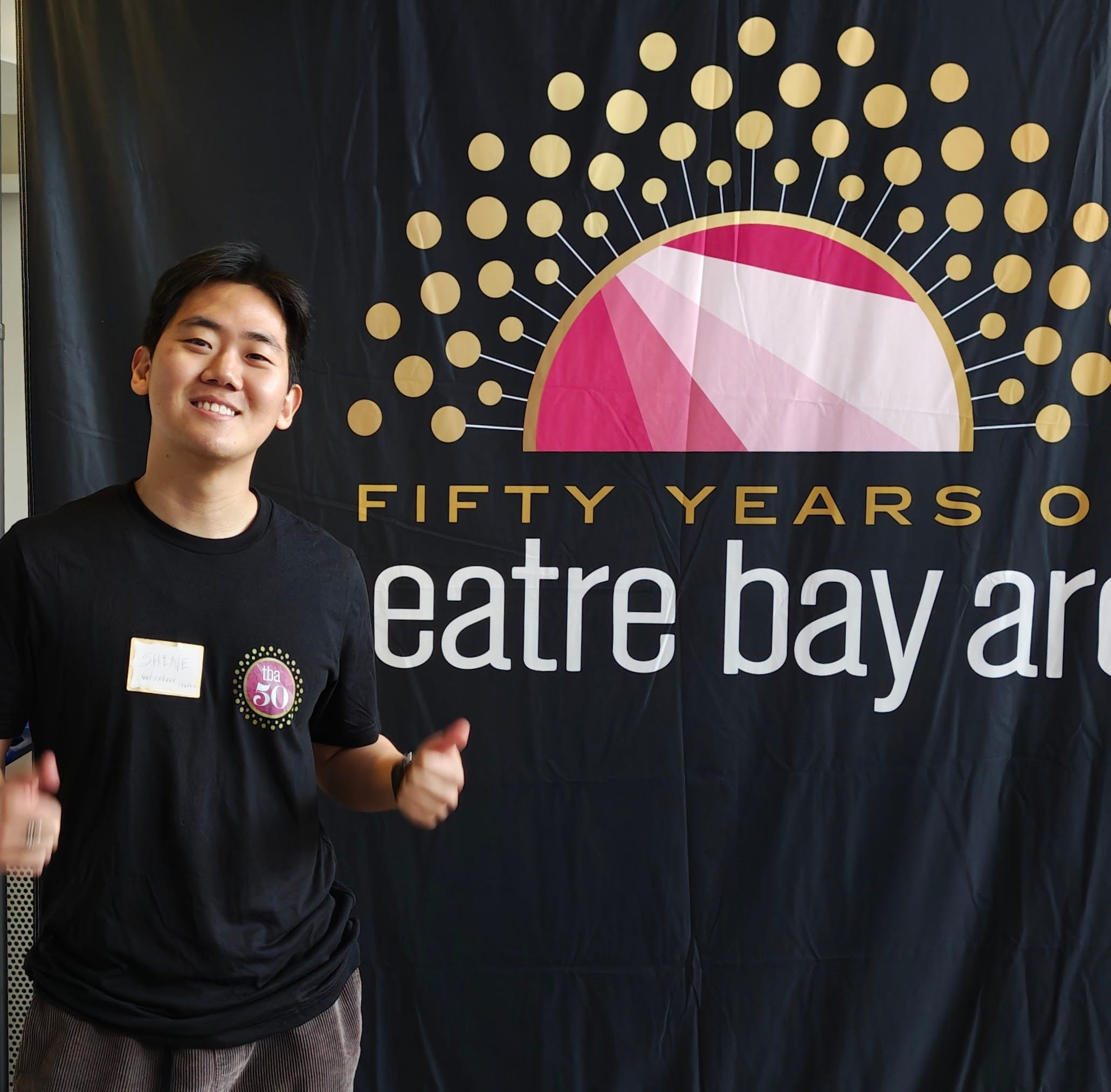
First, let me put this event into perspective: 250 actors across the Bay Area came to perform 2 minutes of a monologue or a song. That’s 250 human beings. Or the number of calories in a scoop of honey sesame chicken from Panda Express. (Okay, that sounded wittier in my head. Don’t ask me why Panda Express is my metric of choice for population sizes. I’m a content creator, not an editor for Penguin Random House!)
Originally, I wanted to be one of those 250. Classmates and colleagues here in San Francisco had strongly encouraged me to audition, and I was compelled. It looked like it was finally time for Shine Lee to bust out his rendition of Fly Me to the Moon. I started hyping myself up in front of the mirror before I stepped into the shower and gripped loofah mic for my nightly musical performance. ‘World, are you ready to be amazed?’ But I pulled an Ash Ketchum and showed up a little too late to the application deadline. I missed my chance.
Then, Michelle, an auntie at work, suggested I volunteer. Immediately, I knew it was a golden opportunity, perfect for where I’m at in my budding journey as an actor. It actually could be better than being on stage. For one, because I’d been housing a huge pimple on my cheek that bulged as if it were a bee sting in a Julie Andrews number. (Any Sound of Music fans here?)
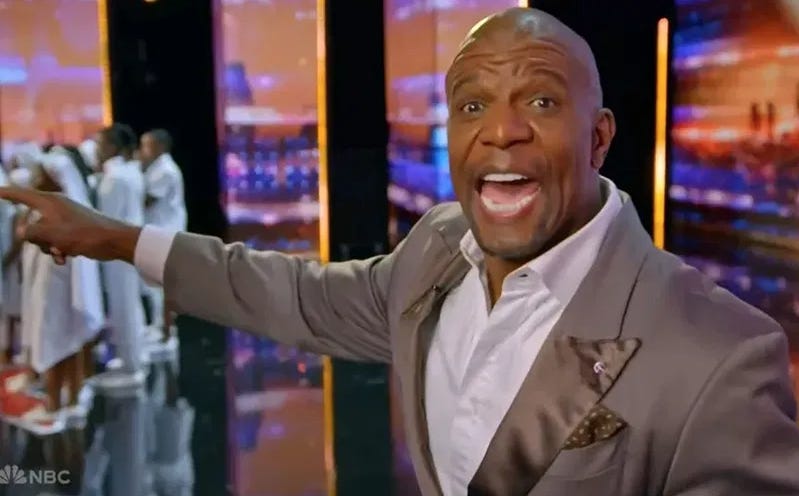
Anyway, one email exchange later I saw my name on the volunteering schedule. “Actor escort” was the role I was assigned. Ooh la la. ‘Am I going to be like Terry Crews on America’s Got Talent?’ I thought, my mind already racing through made-up scenarios. I practiced my exclamations the night before, quiet enough so my housemates wouldn’t hear. ‘Raawwwwww!!!!’ I tried. A little fart came out instead.
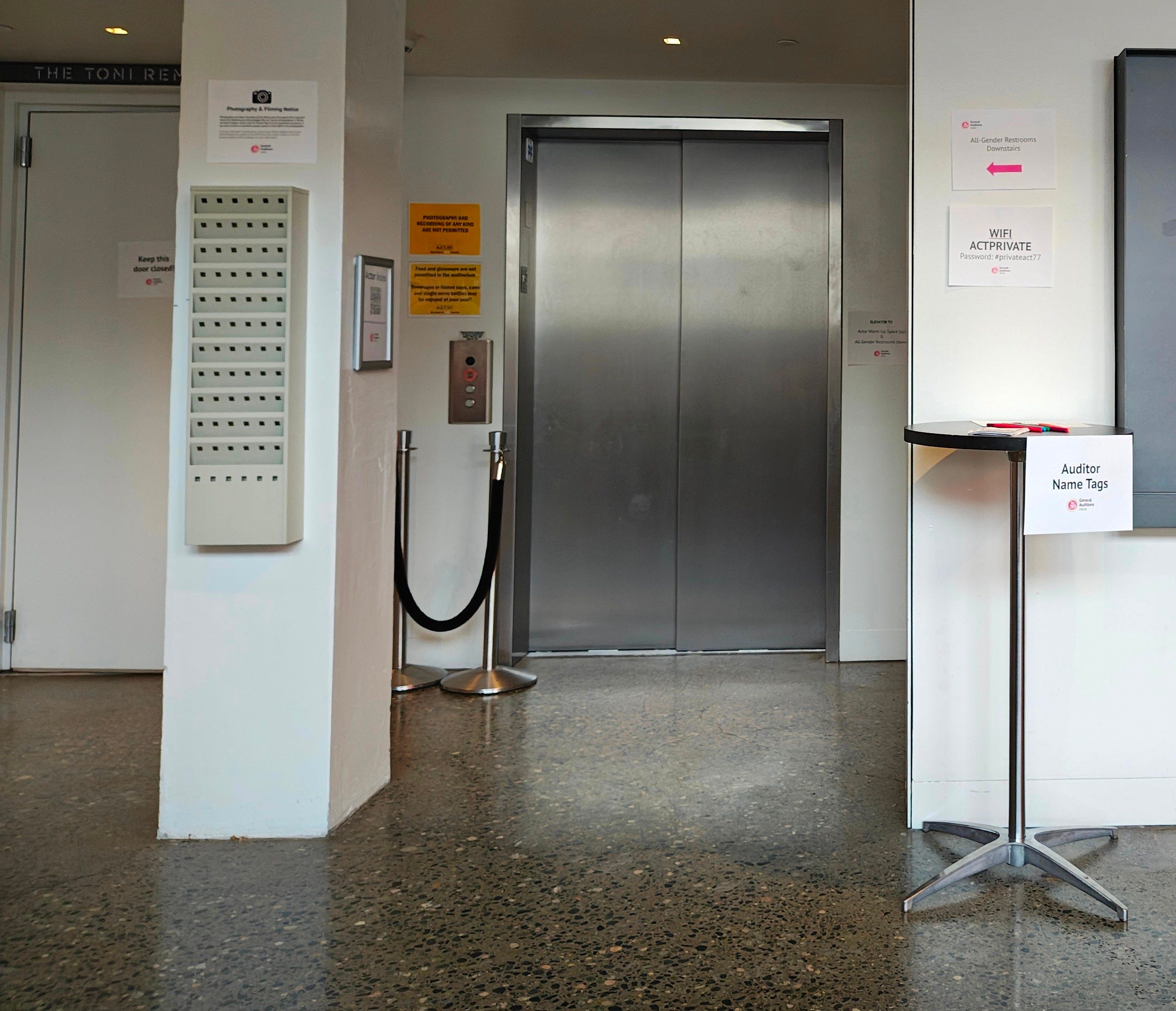
I arrived at 9 AM, and it turned out that that wasn’t even my assignment after all. The staff put me behind a table to check in the “auditors.” Silly me began pulling up IRS.gov before I quickly realized I was about to learn a new use of a word. “Auditors” were the people sitting in the audience watching, evaluating, and jotting down feedback. I think it’d be fair to call them judges, though it seemed like most of them were casting directors and theatre artists representing theatre companies.
So there I sat, gleefully welcoming all 60 auditors, checking them in, and directing them to the theater. One greeting after another. This rhythm of action brought me back to a fairly recent time when I volunteered in a hospital, beaming at each patient entering the lobby, directing them where to go. It’s an instant personality switch, from reserved and contemplative writer Shine to outgoing and cheerful volunteer Shine. It’s hard to tell where the happy smile comes from — if it’s “real” or not. If I’m performing. If I’m bringing that energy into the role or if it’s the role that brings that energy out of me.
Buuut that’s as far as I could get with that train of introspection before the next auditor walked into view. It was a busy morning. “You are here,” I’d say. “I am here!” some of them would reply with a sigh of relief and a professional grin. You are here. I am here. We are here.
After checking everyone in, it was time for me to do what I came for: watch the auditions. I shimmied behind the next group of five stationed by the door, awaiting a cue from the MC inside. We entered the Strand Theater.
I took a seat in the audience, picking one with enough distance from the stage. There I sat, and at a moment’s turn, I was no longer volunteer. I wasn’t a “judge” or an auditor either. I became a witness.
The theater was about half the size of the seats in the audition scene in Pitch Perfect. Y’all know exactly which one I’m talking about, right? (It’s okay if you don’t. That was only, like, the most iconic scene from one of the most influential movies in my entire middle school life, and your appreciation for it only determines, like, any possibility of friendship between us. KIDDING, of course! Of course… ha.)
The air inside was warm enough for me to roll in with just a T-shirt. But that could also have just been my nerves flaring up. For some reason, even though I virtually had no connection to any of the actors lining up by the wings of the stage, a sudden crash of nervousness doused me like a waterfall. Specifically, it was when I saw an actor who was around my age, or was a racial minority, or had some connection to my alma mater — or in a rare case, all three — that my palms got extra sweaty.
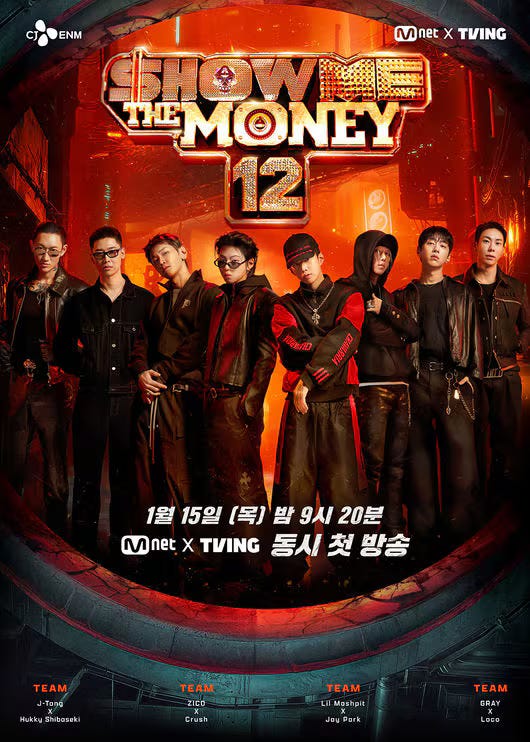
The best way I could explain the feeling is by connecting it to one of the biggest survival shows in television history (at least, according to my inaccurate textbook of world history), Show Me the Money. Show Me the Money is a hip-hop competition show, currently in its 12th season. Now, I can’t deny its shortcomings, particularly regarding cultural appropriation in Korean hip-hop and gender disparities in media and entertainment. But let this be known: the TV series put survival competitions on the map before Squid Games and Single’s Inferno and Culinary Class Wars.
Sidebar: Season 12 is actually in live production AT THIS VERY MOMENT that you’re reading this post (though maybe you’re reading this at 3 AM on a hot, sticky summer night some three years later… who knows.). Ask me who I’m most invested in watching this year if you ever want someone to fill your brain with information that will most likely mean nothing to you. ‘Cause there’s plenty where that came from.
Now stay with me, there’s a reason why I’m bringing this show up. Out of a pool of tens of thousands of applicants from across the country, only a hundred advance to the second round. The second round is infamous for being the most challenging. Each competitor has one minute to rap on a beat in front of four teams of producers (the “judges”). And it’s no joke. You miss a line? Fail. Your voice isn’t clear? Fail. You trip on the rhythm? Instant fail. That’s the level of precision with which the judges listen. And here’s the kicker: if you fail, you lose the gold chain that you acquired in the first round. Not only that, but you get engulfed by a huge ring of flames as the platform beneath you descends, leading you to reconvene with the 99 other contestants who just watched you get grilled, literally. It’s as if the judges are saying, ‘Thank you for your time. Now go, bye.’
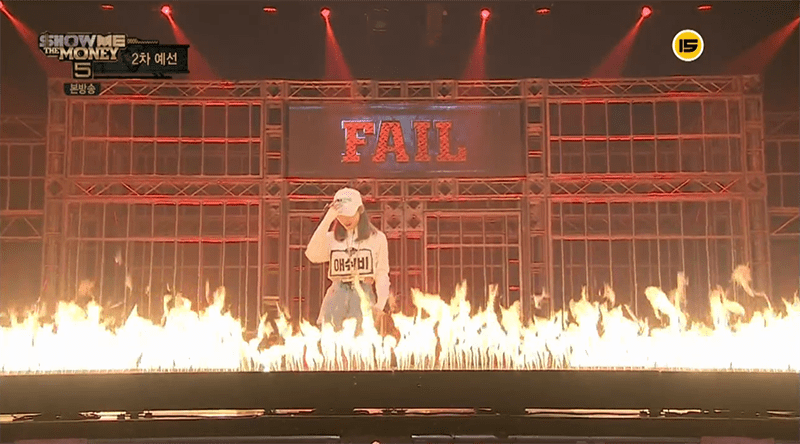
This pose of disappointment you see in the picture above is what I imagined to be the stakes and the emotional heat felt by the actors lining up in the General Auditions. I twiddled my thumbs as the first actor strode up to the front of the stage. ‘Please… Please… Do well. Don’t mess up. Stay strong. Oh God, why am I getting all nervous and sweaty now?’
At the same time as I was imagining that scenario, I paradoxically also anticipated my inner perfectionist critic to come out, especially as I sat among a pack of auditors typing away madly in their laptops, swiping back and forth between actor profiles. I didn’t want the inner critic to come out, but the thoughts began floating to the surface of my mind, like bubbles popping in carbonation. ‘Does he project enough?’ ‘What about her delivery of speech?’ ‘How much do they use the stage?’ Having to control that little guy didn’t help with the intense amount of concern and sensitivity I was already experiencing.
But then, quiet. I spent the rest of the morning with my mouth gaped open, completely moved. The minute I watched the first person open their mouth and utter their lines, all that vanished. Poof. I must have cried at least five times, each bout of tears stinging more than the last.
I was soft, as soft as a cloth.
In Show Me the Money, when a rapper does exceedingly well and strikes a chord, the producers take no time to hide their delight. When a contestant delivers a great performance, it’s a delicious treat for them — it’s part of what they came for (aside from the paycheck). I mean, here, just see for yourself. Take a look at Zion. T in this photo — he is just LOVING it, as if it were his first time trying Dubai chocolate.

Well, back in the Strand Theater, that was the atmosphere that formed around my seat, surrounded by auditors on all sides. Energy. Laughter that knew no edges. Tenderness deep into the skin. Something in the room shifted by the minute. I left the theater feeling like a new body, light and lifted.
I wanted to share this story because the diverse talent and positive energy from the audience that I just witnessed is giving me new perspective on how I hope to approach each day in a nationwide period of political plight and social alienation. It’s just like how psychologist and author Jack Kornfield remarks: “As we turn toward the specific shadows in our own lives with an open heart and a clear and focused mind, we cease resisting [the vulnerability to embrace our past wounds] and begin to understand and to heal. In order to do this, we must learn to feel deeply, not so much opening our eyes as opening the inner sense of the mind and the heart.”
Opening the inner sense of the mind and heart. 25 years ago, author bell hooks concluded her acclaimed book, All About Love: New Visions, by telling us, “As a nation, we need to gather our collective courage and face that our society’s lovelessness is a wound.” Admittedly, there have been times, more so in recent years and especially recent months, where I have felt disdain, disappointment, and sorrow towards the American nation. At first glance, this idea of embracing openness and depth in response to “our society’s lovelessness” might sound a little strange. At least for me. ‘The answer is for us to all start acting lovey dovey?’ I thought skeptically upon reading. I couldn’t think of anything more disconnected from the loud and fragile reality that we as the American village are currently navigating.
But at the auditions, I realized I was mistaken. In the presence of 250 fellow human beings, glowing with a most powerful vulnerability and love for the story in all of us, I became filled with an admiration and respect for each person who stood with their two feet on that stage, emitting radiant spheres of truth and beauty through their voice. There was something that happened with the energy of that room that touched my heart. That’s what I mean when I say I became a witness.
To use author John Kim’s words, “Maybe that’s what this moment is really asking of us — not optimism, not certainty, but courage. The quiet, stubborn courage to keep showing up. To keep loving. To keep telling the truth. To keep building something decent and meaningful in the middle of the wreckage.”
Until next time,
Shine